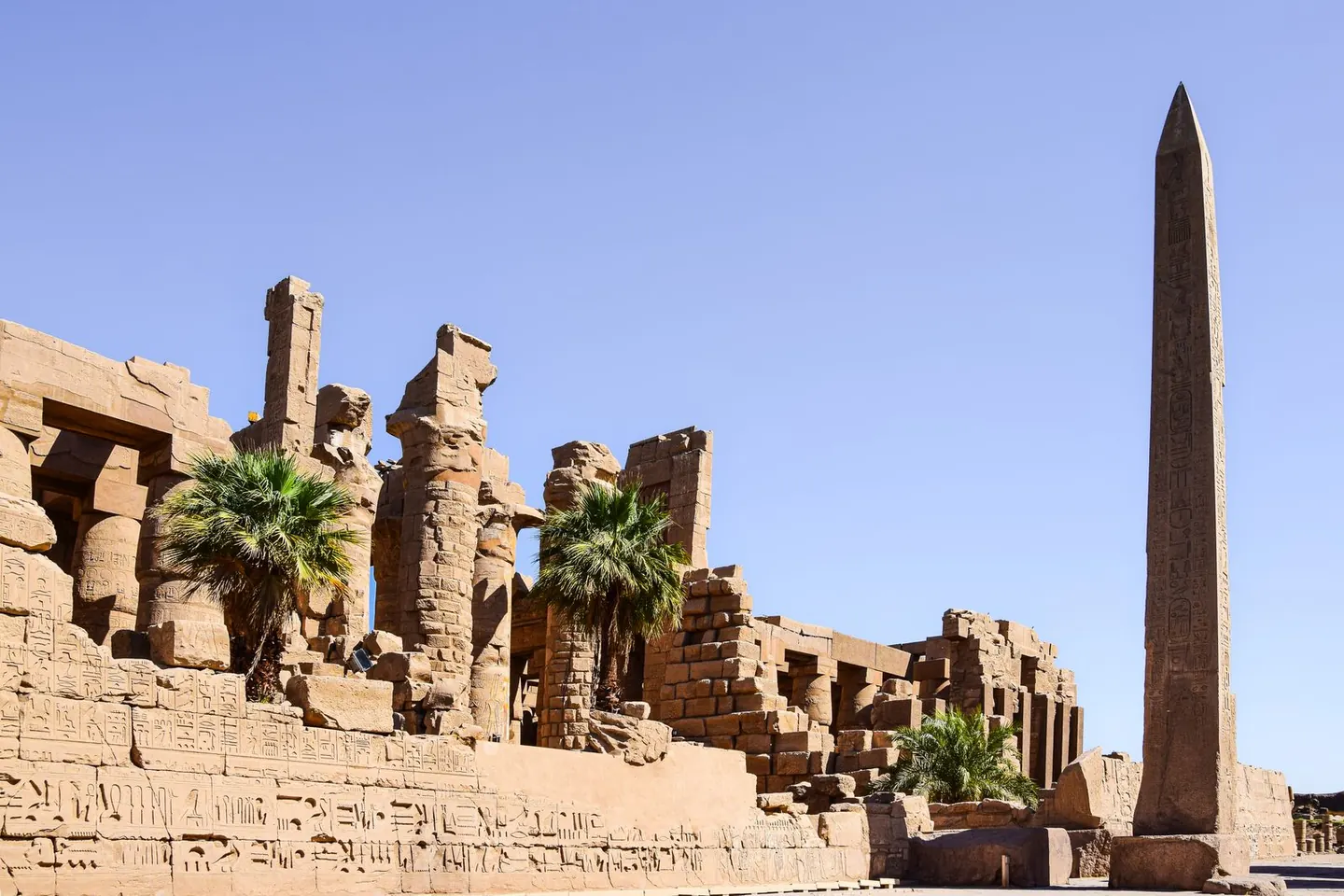
Short answer: in Egypt, cover your shoulders and knees, whether you are a woman or a man. That is the rule given by both the UK Foreign Office ("dress modestly, especially in rural areas, mosques and souqs") and France Diplomatie, which describes the Egyptian dress code as "generally covering (knees and shoulders covered)" for men and women alike. Red Sea resorts are more relaxed, Ramadan is stricter, and the desert is colder at night than most people pack for. We read both government pages on 26 October 2026.
The rule, in one table
| Where | Women | Men |
|---|---|---|
| Cairo, Luxor, Aswan streets | Shoulders and knees covered: loose trousers, a midi or maxi skirt, a T-shirt or shirt with sleeves | Trousers or knee-length shorts at the least, T-shirt or shirt; sleeveless tops draw looks |
| Mosques and churches | Arms and legs covered, a scarf for your hair if asked; shoes come off in mosques | Long trousers, shoulders covered |
| Markets (souqs), villages | The most covered outfit of your trip | Long trousers |
| Temples and pyramids | Same as the street; add a hat and closed shoes for sand and stone | Same as the street; a hat |
| Red Sea resorts (Hurghada, Sharm, Marsa Alam) | Swimwear at the pool and on the hotel beach; cover up to walk through town | Swimwear at the pool; a T-shirt in the lobby and in town |
| During Ramadan | One step more covered than usual | Long trousers |
None of this is a law written for tourists. It is what both governments describe as the local norm, and the UK page adds that "behaviour accepted in tourist resort areas may not be accepted elsewhere". In practice, the more you cover, the less attention you get.
What to wear in Egypt as a woman
France Diplomatie is direct about it: women, "accompanied or, all the more, alone", may attract unwanted attention, and street harassment is "widespread, although decreasing". Clothing does not prevent it, but loose, covering clothes reduce the number of looks and comments in Cairo's streets and markets. A practical wardrobe for a week:
- Two or three pairs of loose trousers in linen or cotton, or long skirts. Leggings alone are tight and draw attention; with a long shirt over them they are fine.
- Tops with short or long sleeves that cover the shoulders and are not low-cut. Linen shirts work in the heat and double as a cover-up.
- A large light scarf. It covers shoulders in a mosque, hair if a mosque asks you to, your neck from the sun at Karnak, and your face in a dusty wind.
- A long cardigan or light jacket for air-conditioned trains, buses and museums, and for desert evenings.
- Swimwear for the hotel pool and beach. On public beaches outside resorts, local women swim covered; follow what you see around you.
You do not need to cover your hair in the street. Many Egyptian women do, many do not, and nobody expects it from a tourist outside a mosque. If you travel alone, the advice on our solo female travel page and the UK Foreign Office's section on sexual harassment (which covers taxis and hotel staff in Red Sea resorts) is worth reading before you leave.
What to wear in Egypt as a man
The covering rule applies to men too, which surprises many visitors. France Diplomatie writes it for "men as well as women". In Cairo and Upper Egypt, Egyptian men wear long trousers almost everywhere; shorts mark you as a tourist and are not appropriate in mosques. A tank top in a market is a step further than most locals would go. Pack:
- Light long trousers (chinos, linen), plus knee-length shorts for the resort or the cruise boat.
- T-shirts and a couple of shirts with sleeves. A shirt with a collar helps in a mosque or a smarter restaurant.
- A cap or hat and sunglasses: at Luxor the average maximum is 41°C in June.
Mosques, churches and religious sites
The UK Foreign Office asks visitors to "seek to avoid offence, especially during Ramadan or when you visit religious areas". In a mosque, everyone takes off their shoes, so wear shoes you can slip off and socks you do not mind showing. Arms and legs should be covered for everyone. Women may be asked to cover their hair: keep the scarf in your bag. At major mosques that receive many visitors, a cover-up is sometimes lent at the entrance, but do not count on it. Coptic churches in Old Cairo expect the same: shoulders and knees covered.
Red Sea resorts
Hurghada, Sharm el-Sheikh, El Gouna and Marsa Alam work differently. Inside the hotel, by the pool and on the hotel beach, swimwear is normal. The UK page's sentence about resort behaviour not being accepted elsewhere is the key: once you leave the hotel for the town, the marina or a day trip to Luxor, dress as you would in Cairo. Neither government page mentions topless sunbathing; given the general dress code, assume it is not accepted.
During Ramadan
The UK Foreign Office says that during Ramadan "clothing that does not meet local dress codes may cause more offence at this time", and asks visitors not to eat, drink or smoke in public during daylight hours. The dates move every year; check them before you book and read our Ramadan travel guide.
Temperatures month by month
Egypt is not hot all year. In winter, a morning at Luxor can start below 10°C, and the desert at night is cold. The table shows the average daily maximum and minimum for each month over ten years (2015 to 2024), from the Open-Meteo historical weather archive.
| Month | Cairo (max / min) | Luxor (max / min) | Hurghada (max / min) |
|---|---|---|---|
| January | 19°C / 9°C | 22°C / 9°C | 21°C / 13°C |
| February | 21°C / 9°C | 25°C / 10°C | 22°C / 14°C |
| March | 25°C / 12°C | 30°C / 14°C | 24°C / 17°C |
| April | 30°C / 15°C | 34°C / 18°C | 28°C / 20°C |
| May | 34°C / 19°C | 39°C / 23°C | 31°C / 24°C |
| June | 37°C / 22°C | 41°C / 26°C | 34°C / 27°C |
| July | 38°C / 23°C | 41°C / 27°C | 35°C / 28°C |
| August | 38°C / 24°C | 42°C / 27°C | 35°C / 29°C |
| September | 36°C / 22°C | 40°C / 25°C | 33°C / 27°C |
| October | 32°C / 19°C | 36°C / 21°C | 30°C / 23°C |
| November | 27°C / 15°C | 29°C / 16°C | 26°C / 20°C |
| December | 22°C / 11°C | 24°C / 11°C | 23°C / 16°C |
What this means for your suitcase:
- November to February: days of 22 to 27°C in Cairo, nights around 9 to 15°C. Bring a warm layer and a jacket for early starts (Abu Simbel and balloon flights leave before dawn) and for a night in the desert.
- March, April and October: warm days, mild evenings. Light clothes plus one long-sleeved layer.
- May to September: 41°C and more in Luxor in July. Loose, light-coloured, covering clothes are cooler than bare skin in the sun. See our summer heat guide.
- Visiting in October or November? Cairo averages 32°C in October and 27°C in November by day, with evenings of 19 and 15°C.
Shoes
Closed, comfortable shoes with a good sole for Giza, Saqqara and the temples: the ground is sand, gravel and uneven stone. Sandals for the city and the boat. Easy-to-remove shoes on mosque days. Flip-flops are fine at the resort, less so on a day of walking in Islamic Cairo.
Your phone is part of the outfit
A covering outfit, a scarf and a phone with working mobile data are the three things that make Egypt easier, especially for a woman travelling alone: maps, ride-hailing, translation and the possibility to share your trip and location with someone, as the UK Foreign Office advises for taxis. Our Egypt eSIM starts at €6.50 a day (€33.00 for 7 days), runs on Vodafone Egypt, Orange Egypt or e& Egypt, and is installed before you leave. Check that your phone is eSIM compatible first. For the rest of the suitcase, see what to pack for Egypt.