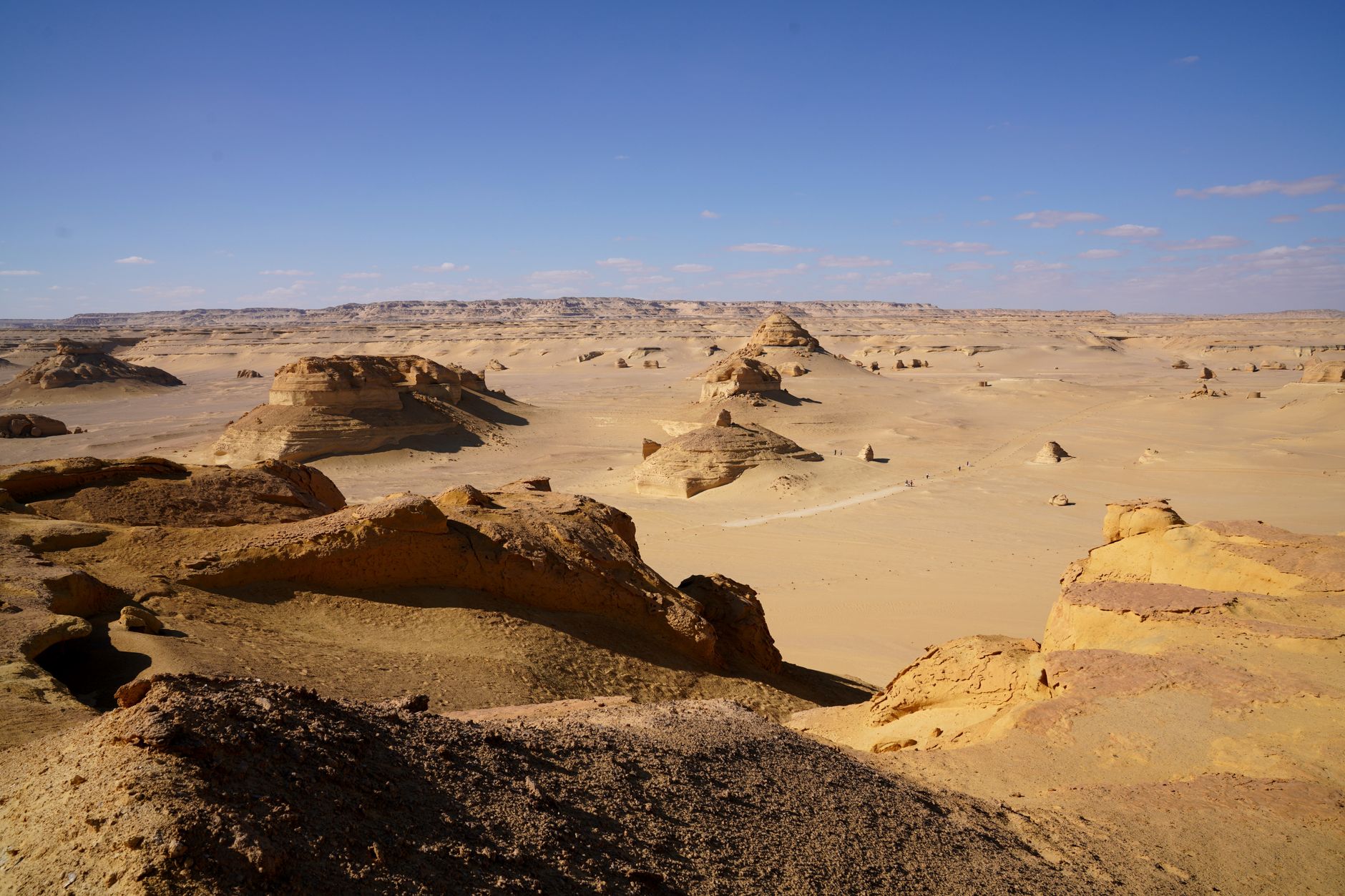
Deep in Egypt's Western Desert, about 150 kilometers southwest of Cairo, lies a paleontological treasure: Wadi Al-Hitan, also known as the Valley of the Whales. This UNESCO World Heritage site in the Fayoum Governorate is a window into a time when this arid desert was a vast ocean. For travelers with a passion for history, nature, and the extraordinary, Wadi Al-Hitan is an unmissable stop on any Egyptian itinerary.
As you plan your visit to this remarkable site, staying connected is essential. With an Egypt eSIM from eSIM Égypte, you can navigate, share your experiences, and access information without worrying about roaming charges. Our unlimited data plans ensure you're always online, whether you're in the desert or the city.
What is Wadi Al-Hitan?
Wadi Al-Hitan, or the Valley of the Whales, is a paleontological site that contains an incredible concentration of fossilized remains of early whales (Archaeoceti). These fossils provide a unique glimpse into the evolution of whales from land-dwelling mammals to the marine giants we know today. The site was designated a UNESCO World Heritage Site in 2005 for its outstanding scientific value and natural beauty.
The valley is part of the wider Wadi El Rayan Protected Area, which includes the Wadi El Rayan lakes and waterfalls. The landscape is dramatic, with wind-carved sandstone rocks and a sense of isolation that makes you feel like you've stepped back in time.
The History and Significance of the Valley of the Whales
The fossils at Wadi Al-Hitan date back around 40 million years, to the Eocene epoch. At that time, the area was covered by a shallow tropical sea, the Tethys Ocean. The fossilized remains found here include complete skeletons of Basilosaurus and Dorudon, two species of ancient whales. These creatures were amphibious, with hind legs that show the transition from land to sea.
The site is not just about whales; it also contains fossils of sea cows, turtles, crocodiles, and other marine life, as well as evidence of early mangrove forests. The preservation is so exceptional that many skeletons are still in their original positions, allowing scientists to study the animals' behavior and environment.
How to Get to Wadi Al-Hitan
Wadi Al-Hitan is accessible by road, but it requires a bit of planning. The most common way is to drive from Cairo or from the town of Fayoum. The journey takes about 2-3 hours from Cairo, with the last part on a desert track. Many travelers opt for a guided tour, which can be arranged from Cairo or Fayoum. If you're driving yourself, a 4x4 is recommended, as the road is unpaved and can be sandy.
Tips for Getting There
- Start early to avoid the heat and have enough time to explore.
- Bring plenty of water and snacks, as there are no facilities in the valley.
- Use a reliable GPS or map, as mobile signals can be weak in the desert. An Egypt eSIM with coverage from eSIM Égypte can help, but don't rely solely on your phone.
- Consider hiring a local guide who knows the area well.
What to See and Do at Wadi Al-Hitan
Once you arrive, the site is well-organized with a visitor center and a marked trail that leads you through the main fossil sites. The center has informative displays and a small museum with some of the most impressive fossils.
The Fossil Trail
The main trail is about 3 kilometers long and takes you past several in-situ fossil skeletons. You'll see the massive bones of Basilosaurus, which could reach up to 18 meters in length. The skeletons are protected by shelters, and there are informative signs explaining each discovery.
The Visitor Center
The visitor center offers a fascinating introduction to the history of the site. It includes exhibits on the geology, the evolution of whales, and the ongoing research. There's also a small gift shop where you can buy souvenirs.
Photography and Stargazing
The surreal landscape of Wadi Al-Hitan is a photographer's dream. The golden sand, sculpted rocks, and clear skies make for stunning photos, especially at sunrise and sunset. At night, the lack of light pollution provides an incredible opportunity for stargazing.
Best Time to Visit Wadi Al-Hitan
The best time to visit is during the cooler months, from October to April. Summer temperatures can be brutal, often exceeding 40°C (104°F), making it uncomfortable and potentially dangerous. The winter months are pleasant, with daytime temperatures around 20-25°C (68-77°F) and cool nights.
Try to time your visit for the late afternoon to enjoy the golden hour and a spectacular sunset. Remember that the site closes at sunset, so plan your time accordingly.
Essential Tips for Visiting Wadi Al-Hitan
- Wear comfortable walking shoes, as the terrain is uneven.
- Bring sunscreen, a hat, and sunglasses to protect yourself from the sun.
- Pack a picnic lunch, as there are no restaurants nearby.
- Respect the site: do not touch or remove any fossils.
- Stay on the marked trail to avoid damaging the fragile ecosystem.
- Consider hiring a guide to get the most out of your visit.
Stay Connected with eSIM Égypte
Exploring the remote beauty of Wadi Al-Hitan doesn't mean you have to be off the grid. With an eSIM for Egypt from eSIM Égypte, you can enjoy unlimited data on reliable 4G/LTE networks (Vodafone Egypt, Orange Egypt, e& Egypt). Whether you need to check maps, share your adventures on social media, or stay in touch with loved ones, our eSIM has you covered.
Our plans are simple: choose the duration that fits your trip—1 day (€6.50), 3 days (€18), 5 days (€26), 7 days (€33), 10 days (€36), 15 days (€46), or 30 days (€86). All plans come with unlimited data, subject to a fair-use policy. You'll receive a QR code by email immediately after purchase, and activation is a breeze. Check your device compatibility with our compatibility checker.
Other Attractions in the Fayoum Region
While Wadi Al-Hitan is the standout, the Fayoum region offers more to explore. The nearby Wadi El Rayan Lakes and Waterfalls are a beautiful natural attraction, and the ancient city of Karanis provides a glimpse into Greco-Roman Egypt. The region is also known for its traditional crafts, such as pottery and weaving.
If you have time, consider spending a day exploring the Fayoum Oasis, with its palm groves and waterwheels. The area is a photographer's paradise, with many opportunities to capture the essence of rural Egypt.
Conclusion
Wadi Al-Hitan is a destination like no other, offering a rare chance to see the remnants of a prehistoric ocean in the middle of the desert. Its UNESCO status underscores its global importance, and a visit here is both educational and awe-inspiring. With careful planning and the right connectivity, you can make the most of your trip to this incredible site.
Don't let connectivity be a worry. Get your Egypt eSIM plans from eSIM Égypte before you travel, and enjoy unlimited data throughout your journey. Safe travels!