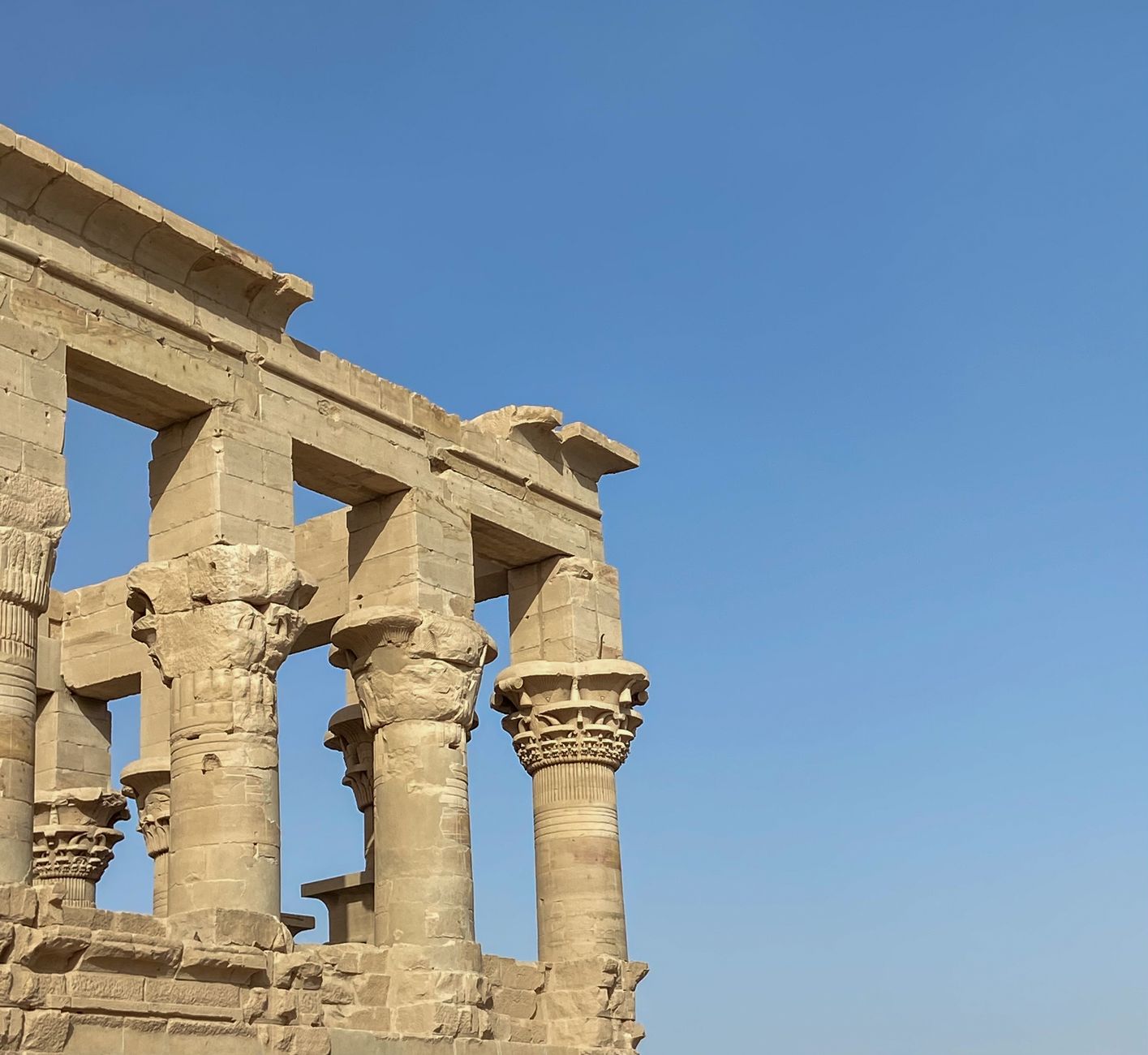
Kom Ombo, a small town on the east bank of the Nile, is home to one of Egypt's most unusual temples: the Kom Ombo Temple, dedicated to two gods—Sobek the crocodile god and Horus the falcon-headed god. But what truly sets this site apart is the adjacent Crocodile Museum, where dozens of crocodile mummies are on display. For travelers cruising the Nile between Luxor and Aswan, Kom Ombo is an unmissable stop. And with Egypt eSIM from eSIM Égypte, you can stay connected to share your discoveries in real time.
Why Kom Ombo Is Unique
Unlike most Egyptian temples, Kom Ombo is a double temple, perfectly symmetrical along its main axis. The left side honors Sobek, the crocodile god of fertility and creation, while the right side is dedicated to Horus the Elder (Haroeris). This duality is reflected in every part of the temple, from the halls to the sanctuaries. The temple was built during the Ptolemaic period (2nd century BC) and later expanded by Roman emperors.
The Crocodile Museum: A Window into Sobek Worship
Just a few steps from the temple, the Crocodile Museum opened in 2012 and houses over 300 crocodile mummies, ranging from hatchlings to full-grown adults. These mummies were discovered in the nearby necropolis of Kom Ombo, where crocodiles were revered as incarnations of Sobek. The museum also displays crocodile eggs, statues, and funerary stelae. The highlight is a massive 4.5-meter mummified crocodile, perfectly preserved.
Why Crocodiles Were Mummified
In ancient Egypt, crocodiles were both feared and worshipped. Sobek was associated with pharaonic power, military might, and the Nile's fertility. Devotees would mummify crocodiles as offerings, hoping to gain the god's favor. The museum's collection offers a rare glimpse into this unique cult.
Practical Tips for Visiting Kom Ombo
- Location: Kom Ombo is about 50 km north of Aswan. Most visitors arrive by Nile cruise or by taxi from Aswan.
- Opening Hours: Daily 9:00 AM – 5:00 PM (last entry 4:00 PM).
- Ticket Price: Combined ticket for temple and museum: around 100 EGP (approx. €4).
- Best Time to Visit: Early morning or late afternoon to avoid heat and crowds.
- Photography: Allowed. No flash inside the museum.
Before you go, check your phone compatibility with our eSIM to ensure seamless connectivity.
What Else to See in Kom Ombo
In addition to the temple and museum, the town itself offers a lively market and a beautiful view of the Nile. Some cruise ships stop for a few hours, which is enough to explore the temple complex. If you have more time, consider a felucca ride on the Nile.
Stay Connected with eSIM Égypte
Exploring Kom Ombo and the Crocodile Museum is an unforgettable experience. With Egypt eSIM from eSIM Égypte, you get unlimited 4G/LTE data on Egypt's best networks (Vodafone, Orange, e& Egypt). Plans start at €6.50 for 1 day, with instant QR code delivery by email. No physical SIM, no contracts. Perfect for sharing your crocodile mummy photos instantly. FAQ and contact are available if you need help.
Conclusion
Kom Ombo and its Crocodile Museum offer a unique window into ancient Egyptian religion and the cult of Sobek. Whether you're a history buff or a curious traveler, this stop on the Nile will leave you amazed. Don't forget to stay connected with Egypt eSIM from eSIM Égypte—your reliable travel companion.