Dendera and the Temple of Hathor: A Journey Through Time
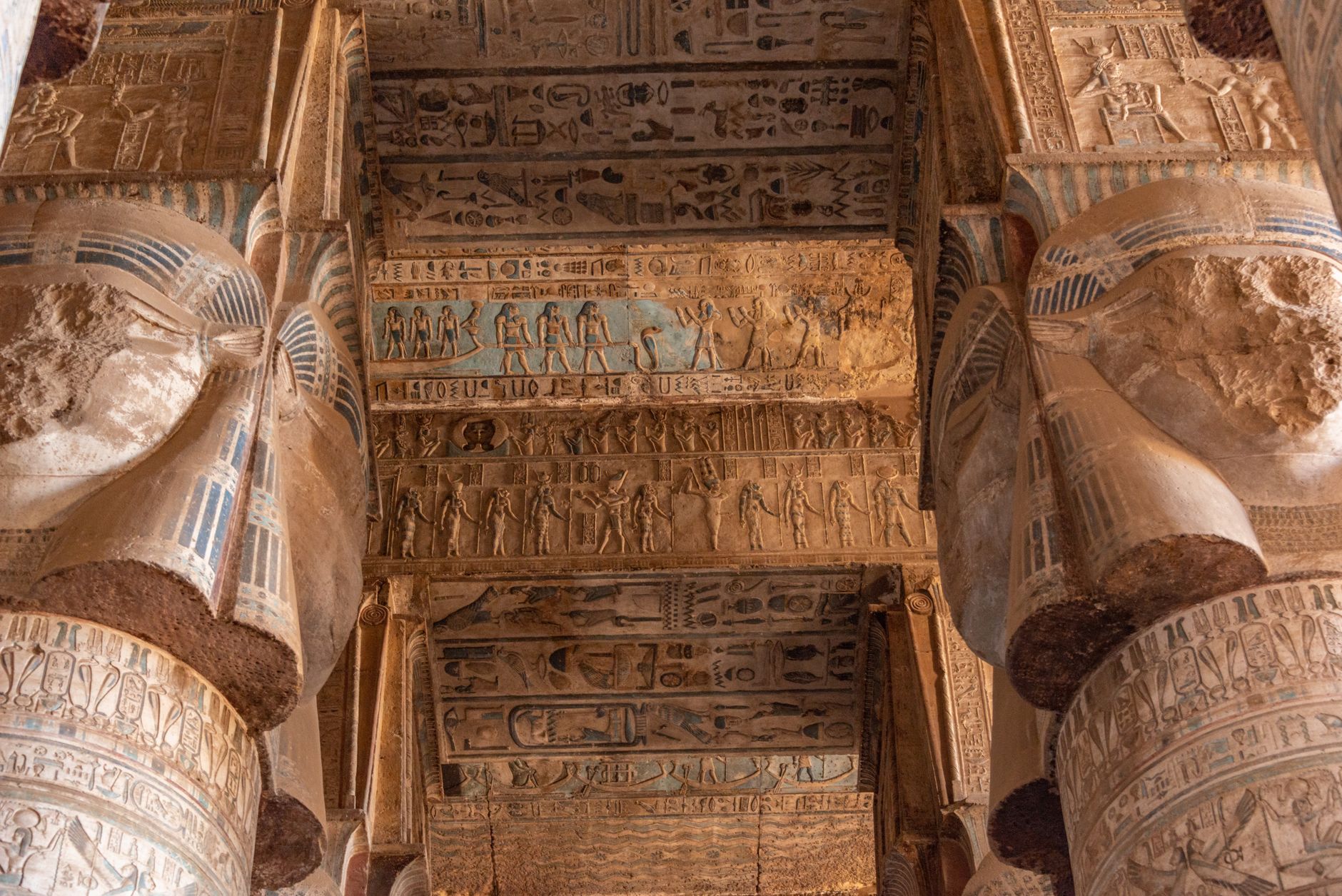
Nestled on the west bank of the Nile near Qena, the Temple of Hathor at Dendera is one of Egypt's most captivating ancient sites. Unlike many other temples, it boasts remarkably preserved ceilings and walls, vividly painted with astronomical scenes and vibrant hues that have survived millennia. This article unveils the secrets of the Dendera zodiac and the temple's original colors, offering practical tips for your visit.
For travelers exploring Egypt, staying connected is essential. With Egypt eSIM plans from eSIM Égypte, you can enjoy unlimited data to navigate, share your journey, and access information on the go, all without the hassle of physical SIM cards.
The Zodiac Ceiling: An Ancient Astronomical Marvel
The Dendera zodiac is a large bas-relief ceiling in the pronaos of the temple, depicting the sky with constellations, planets, and the twelve signs of the zodiac. It's one of the most famous astronomical representations from ancient Egypt, often considered a map of the heavens as understood by the Ptolemaic era. The original relief is now in the Louvre, but a precise copy remains at Dendera, allowing visitors to marvel at its detail.
This celestial masterpiece not only showcases the Egyptians' advanced understanding of astronomy but also their artistic skill. The zodiac is arranged in a circular pattern, with figures representing the constellations and decans, which were used for timekeeping and religious rituals. Exploring this ceiling is like stepping into an ancient observatory.
The Vibrant Colors of Hathor's Temple
While many Egyptian temples have lost their original paint, Dendera's walls and columns still display vibrant blues, reds, yellows, and greens. These colors were not merely decorative; they held symbolic meaning and were believed to have protective and regenerative properties. The reliefs depict goddesses, pharaohs, and rituals, all vividly colored, offering a rare glimpse into the ancient world's visual splendor.
The temple's color palette is remarkably well-preserved, especially on the ceilings and in the crypts. The use of Egyptian blue, a synthetic pigment, is particularly striking, as it has retained its brilliance. Visitors often describe the experience as awe-inspiring, as the colors bring the stories to life.
Architecture and Highlights of the Temple Complex
The Temple of Hathor is the main structure within a larger complex that includes a sacred lake, a sanatorium, and smaller chapels. The temple's facade, with six columns adorned with Hathor-headed capitals, is iconic. Inside, the hypostyle hall features 24 columns, each decorated with intricate reliefs. The crypts, accessible via hidden staircases, contain some of the best-preserved reliefs, including the famous “Dendera light” carving, which some interpret as an ancient electrical device.
The Crypts and the Dendera Light
The crypts are a must-see for their enigmatic carvings. The so-called “Dendera light” depicts a snake emerging from a lotus flower, often compared to a light bulb. While Egyptologists interpret this as a mythological scene, it remains a popular topic for alternative theories. Regardless of interpretation, the crypts offer a unique atmosphere and a chance to see the temple's foundations.
The Sacred Lake and Sanatorium
To the east of the temple lies the sacred lake, where ritual purification took place. The sanatorium, adjacent to the temple, was a place where pilgrims sought healing through dreams and rituals. These areas provide a broader understanding of the temple as a center of religious and medical practice.
Visiting Dendera: Practical Tips
Dendera is often visited as a day trip from Luxor or Hurghada. The temple is open from morning until late afternoon, and it's advisable to go early to avoid the heat and crowds. There are no extensive tourist facilities on site, so bring water and sun protection. A guide can enhance your experience by explaining the complex iconography.
Getting There
Dendera is located about 60 kilometers north of Luxor. You can hire a taxi or join an organized tour. The journey takes about an hour, offering scenic views of the countryside. If you're driving, ensure your eSIM provides reliable data for navigation; check Egypt network coverage to stay connected.
Best Time to Visit
The best months are from October to April when temperatures are milder. Early morning visits (around 8 AM) are ideal, as the site is quieter and the light is good for photography. Avoid midday sun in summer.
Why Choose eSIM Égypte for Your Travel Connectivity
Exploring ancient sites like Dendera is more enjoyable when you have reliable internet access. eSIM Égypte offers Egypt eSIM plans with unlimited data, ensuring you can download maps, share photos, and stay in touch with family. Our plans are simple, with durations from 1 to 30 days, and delivery via QR code instantly after purchase. We support French and English, and you can check your phone compatibility before you travel.
Our eSIM works on 4G LTE networks across Egypt, thanks to partnerships with major providers. While data is unlimited, a fair-use policy applies: after about 1 GB of high-speed data per day, speeds may be reduced to 512 Kbps, but you'll never run out. This makes eSIM Égypte the perfect companion for your Egyptian adventure.
Conclusion
Dendera's Temple of Hathor is a testament to ancient Egyptian artistry and astronomical knowledge. Its zodiac ceiling and vibrant colors are unlike any other, offering a unique window into the past. When planning your visit, ensure you have the right connectivity to enhance your experience. With eSIM Égypte, you can stay online without worries, focusing on the wonders of Egypt.
Don't let connectivity issues hinder your exploration. Explore our Egypt eSIM plans today and travel with confidence.