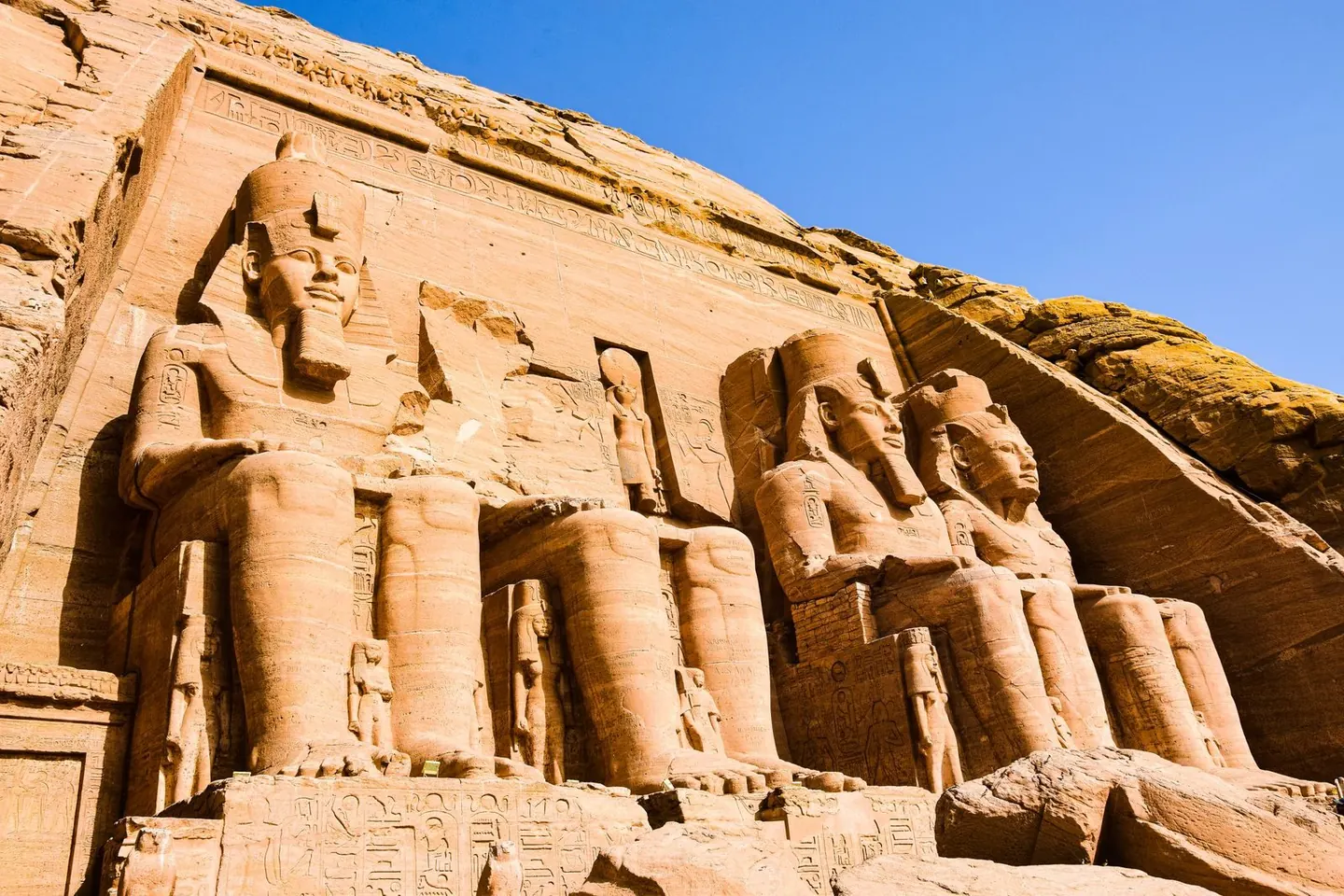
Short answer: a foreign adult pays 750 EGP to visit Abu Simbel (375 EGP for a student). On 22 February and 22 October, the two days a year when the rising sun reaches the back of the Great Temple, the price goes up to 1,200 EGP (600 EGP for a student). These are the prices on the official page of Egypt's Ministry of Tourism and Antiquities (egymonuments.gov.eg), read on 11 November 2026.
Abu Simbel ticket prices, official
| Ticket | Foreign adult | Foreign student |
|---|---|---|
| Abu Simbel, any normal day | 750 EGP | 375 EGP |
| 22 February and 22 October | 1,200 EGP | 600 EGP |
The ministry lists one price for the Abu Simbel site, which has two rock-cut temples: the Great Temple of Ramesses II and the Small Temple of Hathor and Queen Nefertari. Egyptian citizens have a separate, lower price list (30 EGP, or 60 EGP on the two festival days), which is why figures quoted in older blogs and forums rarely match what a foreign visitor pays today.
If you arrive by road, the vehicle also pays an entry ticket: the ministry lists 25 EGP for a car or taxi, 50 EGP for a microbus, 75 EGP for a coaster and 100 EGP for a bus. On an organised day trip this is normally included in the price; with a private driver, agree beforehand on who pays it.
Opening hours
The ministry lists Abu Simbel as open 6:00 to 17:00 every day. Most visitors aim for the opening: the temples face east, the morning light on the colossi is the best of the day, and the heat in this part of Egypt rises quickly from mid-morning, even in winter.
The sun festival: 22 February and 22 October
The Great Temple was cut into the rock by Ramesses II around 1264 BC, with such precision, in the ministry's words, that on two days a year, 22 February and 22 October, the sun's rays enter the temple, cross the main hall and light up the statues in the innermost sanctuary. Four deities sit there: Amun-Ra, Ra-Horakhty, Ptah and a deified Ramesses II.
Those two mornings are the busiest of the year at Abu Simbel and the only days with the higher 1,200 EGP ticket. The next date is 22 February 2027. If you want to be inside when the light enters, plan the whole trip around that date, arrive in the dark, and expect crowds. If you only want to see the temples, any other day is calmer and costs 750 EGP.
Is a festival day worth 450 EGP more?
It depends on what you came for. On 22 February and 22 October you pay 1,200 EGP instead of 750, you get up even earlier, and you share the site with the largest crowds of the year; the moment itself happens inside the Great Temple, where space is limited. In exchange, you see something the temple was designed for more than three thousand years ago. If the light in the sanctuary is the reason for your trip, it is worth it. If you mainly want time in front of the colossi and inside both temples, a normal day gives you more of both for less.
What you will see
- The Great Temple: four seated colossi of Ramesses II on the façade. One of them collapsed in an ancient earthquake, and its fragments are still on the ground. Inside, standing statues of the king line the main hall up to the sanctuary.
- The Small Temple: to the north, dedicated to the goddess Hathor and to Nefertari, Ramesses II's Great Royal Wife. On its façade, her statues are the same size as her husband's, which the ministry calls a very rare example.
- A rescued site: both temples were moved from their original location in 1968, after the Aswan High Dam threatened to submerge them, in an international effort led by UNESCO. The site joined UNESCO's World Heritage list in 1979.
Getting there from Aswan
Abu Simbel lies in Nubia, near Egypt's southern border, far south of Aswan. Most visitors come on a long day trip from Aswan, leaving before dawn to be there at opening, either with an organised tour or a private driver. Check the current options with your hotel or tour operator: the ticket prices above do not include transport.
Combine it with the other Aswan sites
Official prices for a foreign adult, read on the same day on each site's page (for example Philae):
| Site | Foreign adult |
|---|---|
| Philae (boat to the island not included) | 550 EGP |
| Elephantine Island | 200 EGP |
| Kom Ombo temple, with the Crocodile Museum | 450 EGP |
| Edfu temple | 550 EGP |
A typical Aswan programme of Abu Simbel and Philae comes to 1,300 EGP in tickets for a foreign adult, or 1,750 EGP on a festival day. For more on the city, the Nubian villages and Lake Nasser, see our Aswan travel guide, and for an evening on the river our felucca guide.
Practical tips
- Students: bring your student card and passport to ask for the student price.
- Water, a hat and sunscreen: the walk from the entrance to the temples is in full sun.
- Leave early, eat later: pack a light breakfast for the road.
- Festival days: book your transport early, as many visitors aim for the same morning.
- Photos: follow the guards' instructions inside the temples; see our guide to photography rules in Egypt.
Your phone on the Abu Simbel road
The road south from Aswan crosses long stretches of desert. Before you leave, download an offline map of the area (our offline Google Maps guide shows how), so you are not dependent on signal on the way. In Aswan and at the sites, our Egypt eSIM gives unlimited data from €6.50 for a day (€33.00 for 7 days) on Vodafone Egypt, Orange Egypt or e& Egypt; see our coverage page and check that your phone is eSIM compatible.
Prices and facts: Ministry of Tourism and Antiquities, read 11 November 2026. Prices change: check the official page before your visit.