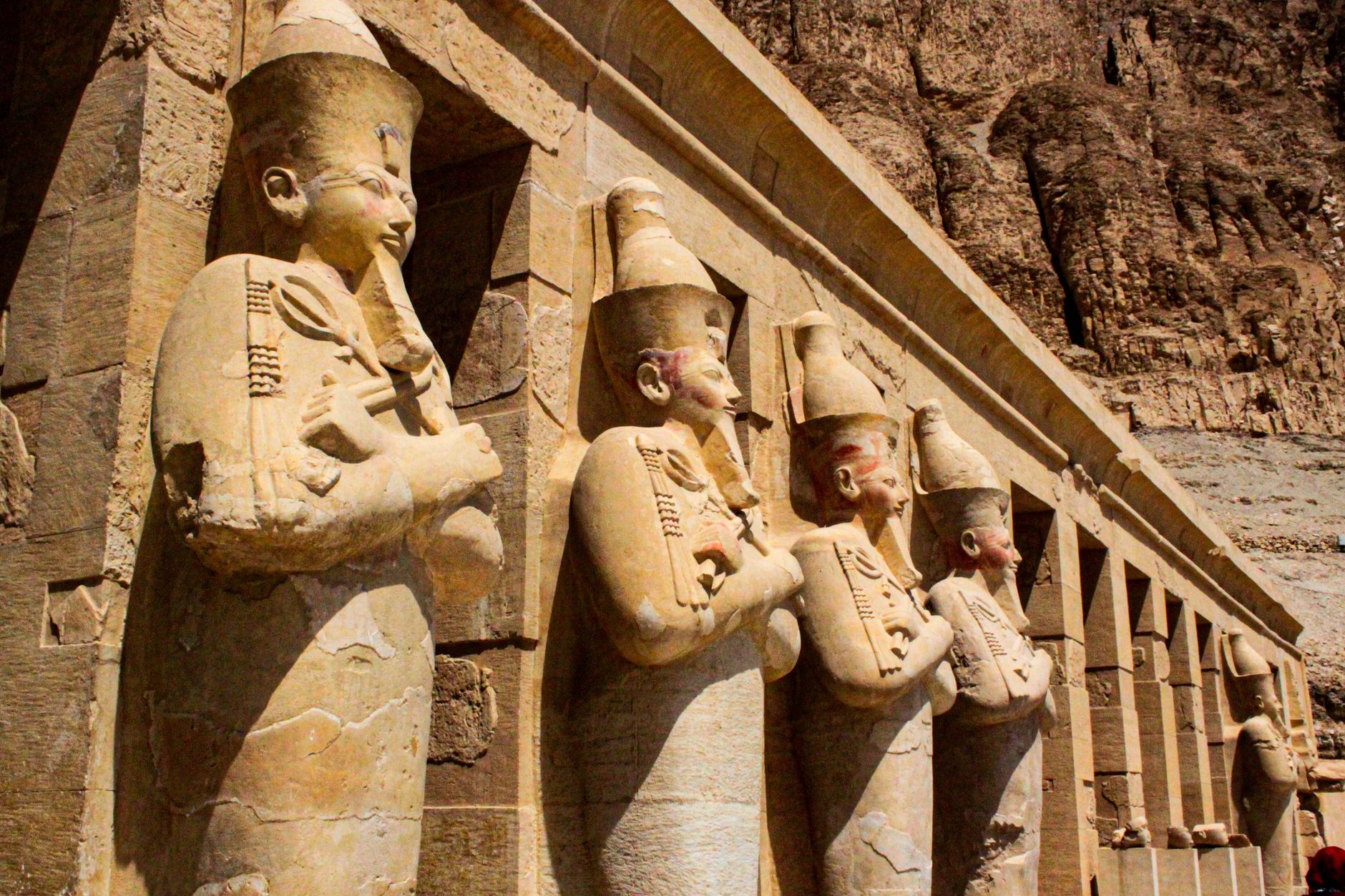
In the heart of Middle Egypt, along the east bank of the Nile, lie the haunting remains of Tell el-Amarna, the capital city built by the 'heretic pharaoh' Akhenaten. Unlike the grand temples of Luxor or the pyramids of Giza, Amarna offers a raw, intimate glimpse into a revolutionary period of ancient Egyptian history. For the intrepid traveler, it's a journey off the beaten path, a place where you can almost hear the echoes of a radical experiment in religion and art.
This guide will tell you everything you need to know about visiting Tell el-Amarna, from its fascinating history to practical tips for your trip. And remember, to stay connected while exploring this remote corner of Egypt, an Egypt eSIM is your best companion.
Why Visit Tell el-Amarna?
Tell el-Amarna, known in antiquity as Akhetaten ('Horizon of the Aten'), was built by Pharaoh Akhenaten (c. 1353–1336 BCE) as the new capital dedicated to the worship of the sun disc, the Aten. This was a radical departure from the traditional pantheon of Egyptian gods, and it produced a unique artistic style characterized by naturalistic and sometimes exaggerated forms. Visiting Amarna is like stepping into a living museum of this revolutionary period.
Top Attractions at Tell el-Amarna
- The Great Aten Temple: Once the largest temple complex in Egypt, now reduced to foundations and a vast open space. Imagine the open-air courtyards where offerings were made to the sun.
- The Small Aten Temple: A smaller but better-preserved temple, with mud-brick walls still standing to a considerable height.
- The Royal Tomb of Akhenaten: Located in a remote wadi east of the city, this tomb is unfinished but contains beautiful reliefs depicting the royal family worshipping the Aten.
- The Boundary Stelae: Carved into the cliffs around Amarna, these inscriptions mark the boundaries of the ancient city and are crucial for understanding Akhenaten's vision.
- The Workmen's Village: The remains of the homes of the artisans who built the royal tombs, offering a glimpse into daily life.
History of Akhenaten's Capital
Akhenaten, originally Amenhotep IV, changed his name and moved the capital from Thebes to a virgin site in Middle Egypt. He built his city quickly, with palaces, temples, and administrative buildings, all dedicated to the Aten. The city thrived for about 15 years, but after Akhenaten's death, his successors, including Tutankhamun, returned to Thebes and the old gods. Amarna was abandoned and fell into ruin, its stones later reused in other constructions.
How to Get to Tell el-Amarna
Amarna is located near the village of El-Till, about 12 kilometers south of the town of Mallawi. The nearest major city is Minya, about 58 kilometers to the north. You can reach Minya by train from Cairo or Luxor, then take a taxi or microbus to El-Till. From El-Till, you can hire a local guide with a vehicle to explore the site. The journey is part of the adventure, offering views of rural Egypt.
Best Time to Visit
The best time to visit is from October to April, when temperatures are milder. Summer months (May to September) can be extremely hot, making outdoor exploration uncomfortable. Early morning visits are recommended to avoid the heat and crowds (though crowds are rarely an issue here).
Travel Tips for Visiting Amarna
- Hire a guide: The site is not well signposted, and a guide can provide valuable context and navigate the desert tracks.
- Bring water and sun protection: There is little shade, and you'll be walking a lot.
- Wear sturdy shoes: The terrain is uneven, with sand and rocks.
- Combine with other sites: Consider visiting the nearby Beni Hassan tombs or the city of Minya.
- Check for permits: Sometimes the site requires a permit, which your guide can arrange.
Staying Connected with Egypt eSIM
Exploring remote sites like Tell el-Amarna means you might be away from Wi-Fi for long periods. To share your adventure on social media, navigate, or stay in touch with family, you need reliable internet. Egypt eSIM offers unlimited data plans that work on the best networks in Egypt, including Vodafone, Orange and e&. You'll receive your eSIM via QR code instantly, so you can be online as soon as you land. Check coverage in the region to ensure you're connected even in remote areas.
Don't let a lack of connectivity ruin your trip. With an eSIM, you can access maps, translation apps, and travel guides without worrying about roaming charges. It's the smart choice for any traveler to Egypt.
Conclusion
Tell el-Amarna is a unique destination that offers a deeper understanding of ancient Egypt's most controversial pharaoh. It's a place of solitude and reflection, far from the bustling tourist centers. Plan your visit, pack your sense of adventure, and don't forget to get your Egypt eSIM before you go. For any questions, feel free to contact us.